How autonomous retail can help solve staffing shortages in franchise and multi-location retailers

You can find staffing shortages in many franchise and multi-location stores. More than 75% of restaurant leaders have trouble hiring and keeping workers. Quick-service operators say they face labor problems 91% of the time. Autonomous retail lets you fix these shortages. Automation technologies like self-checkout systems make work easier and help you grow with less staff. Customers want smooth shopping, so retailers use these solutions more quickly.
Key Takeaways
Autonomous retail uses technology to need fewer workers. This helps stores run well with less staff.
Cashierless technology makes shopping faster. It lets stores stay open longer. This makes customers happier.
Robotics and AI do easy jobs automatically. This lets workers help customers more. It also lowers stress for staff.
Using autonomous retail needs good planning. Stores should start small. They must teach customers about new technology.
Spending money on automation can lower labor costs. It can make employees more interested in their work. It also gives customers a better shopping experience.
Staffing Shortages in Retail

Persistent Labor Gaps
Staffing shortages are a big problem in retail today. Many stores have trouble finding enough workers. They also struggle to keep their stores running well. About 65% of retailers say they have major staffing problems. There are many reasons for these gaps:
Workers want schedules that fit their lives better.
Retail jobs often pay little and have few chances to move up.
Some workers leave because they worry about getting sick.
Some people retire early or look for jobs they enjoy more.
Parents may quit if they cannot find someone to watch their kids.
The workers who stay feel tired and stressed from extra work.
These problems do not go away by themselves. They can make it hard to keep stores open and help customers.
Limits of Traditional Approaches
Old ways to fix staffing shortages do not always work. Some stores use sales data to decide where to put workers. They focus on busy areas like vitamins and beauty. Some move workers to new stores when one closes. This helps a little, but not enough.
Traditional staffing is hard for franchise and multi-location stores. It is tough to find and keep good workers when stores are far apart. Different places have different labor laws, which makes things harder. Stores also need workers who know the area and can learn fast. Old ways do not always help with this.
Stores need new ideas to solve these problems. Autonomous retail can help fill gaps and keep stores open, even with fewer workers.
Autonomous Retail Solutions
Cashierless Technology
Cashierless technology is changing how stores work. Customers scan and pay for items themselves. Stores use cameras and sensors to watch what shoppers pick up. Smart shelves help track products. Automated checkout systems handle payments. This means stores need fewer cashiers. Shopping becomes faster for everyone.
Cashierless stores need fewer workers than regular stores.
Automated checkout systems take care of payments.
Electronic shelf labels update prices by themselves.
Many franchise stores use cashierless technology now. For example, Aisle 24 has 21 locations. Younger shoppers like Gen Z and millennials enjoy these stores. They are quick and easy to use. Stores can open in more places and serve more people with less staff.
Cashierless technology lets stores stay open longer. Some stores run all day and night. They do not need people at the checkout. This helps stores sell more and serve customers anytime.
Robotics and AI
Robotics and AI help solve staffing problems. Robots do simple jobs like cleaning floors. They also move products around. Workers can spend more time helping customers. AI systems watch shelves and check inventory. They spot when items run low. These tools help keep products in stock and cut mistakes.
Here are ways robotics and AI help stores:
Autonomous robots check inventory and fix pricing mistakes.
Cleaning robots keep stores neat and lower cleaning costs.
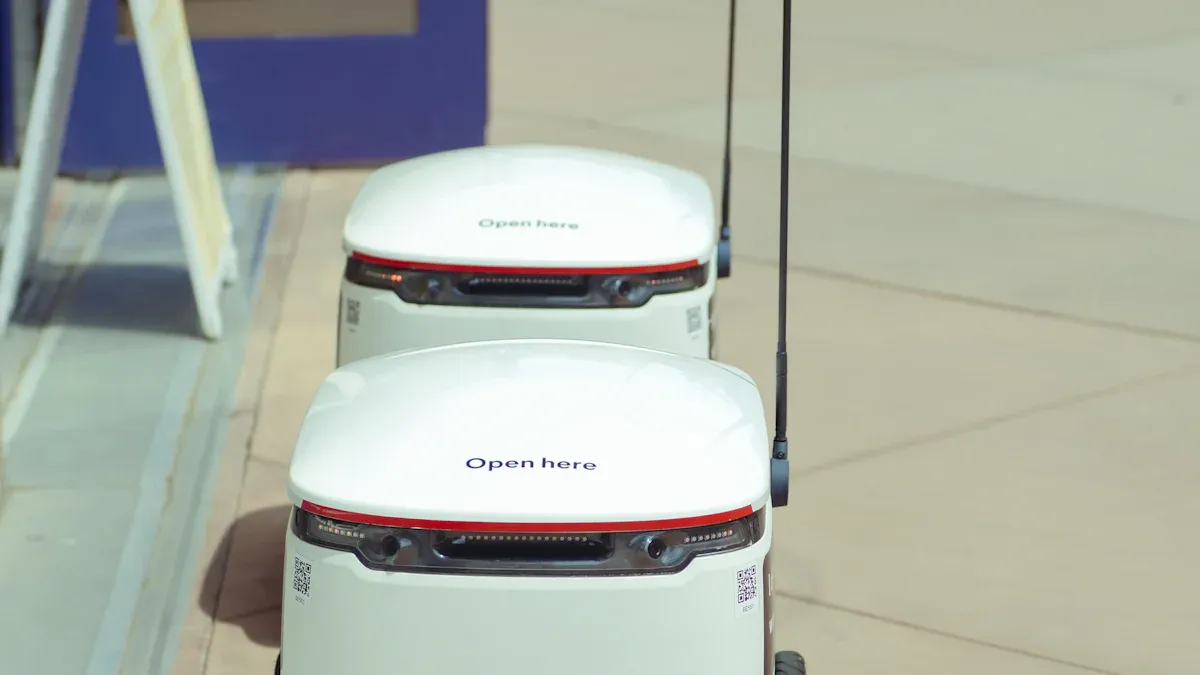
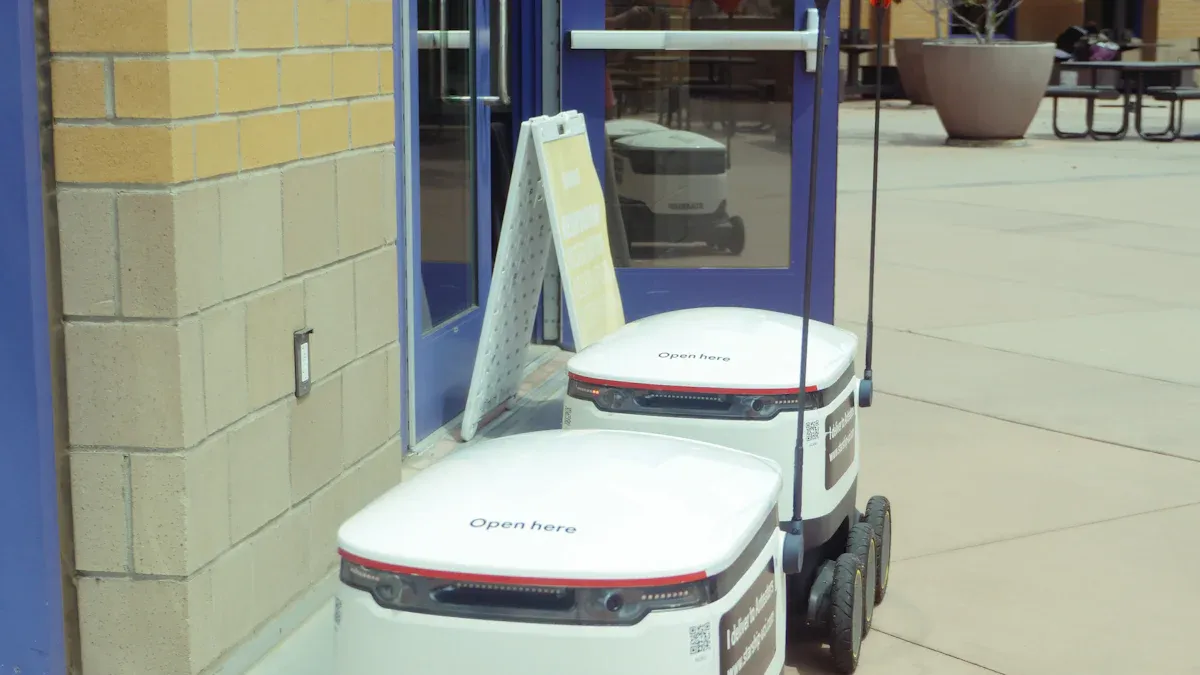
Delivery robots carry heavy things and work long hours.
AI systems give shoppers personal tips and spot fraud.
Chatbots answer questions and handle most requests.
Robots in warehouses pick and pack items fast.
Stores improve a lot with these tools. Robots can cut pricing mistakes by 90%. AI can lower out-of-stock items by 60%. Customer service bots answer most questions without staff. These changes save money and make stores work better.
Technology Type | Benefits | Impact on Retail |
|---|---|---|
Autonomous Mobile Robots | Watch inventory and fix pricing mistakes. Cut errors by 90%. | Save money in stores with low profits. |
Computer Vision | Watch shelves and checkout. Improve shelf rules. | Lower out-of-stock items by 60%. |
AI-Driven Systems | Give personal tips, spot fraud, help workers. | Raise transaction value by 15-25%. |
Chatbots and Virtual Assistants | Handle most questions and requests. | Make customer service work better. |
Visual Search | Find products with images. Raise conversion rates. | Works well in fashion and home goods. |
Expanding with Fewer Staff
Autonomous retail helps you grow your business with less staff. You can open new stores in busy places. You do not need to hire many workers. Self-sufficient stores use technology for most tasks. Only a few people are needed for support and maintenance.
You can set up new stores fast and reach more people.
Stores can run with fewer workers or sometimes none.
Technology keeps stores open longer, even all day and night.
Autonomous retail changes the jobs you need. You may hire more people for tech support or data analysis. Some help customers online. Teams need training for new roles. You can still run more stores with fewer people.
Autonomous retail lets stores stay open 24/7. This helps you serve more customers and boost sales. It works even when it is hard to find workers.
Autonomous retail solves staffing shortages. It also helps stores grow and serve customers better.
Employee and Customer Benefits
Reduced Staff Strain
Autonomous retail solutions make work easier for your team. Automation means employees do not do every task. This lowers stress and helps them feel supported. Here are some benefits:
Employees feel important when you give feedback often.
Workers who feel engaged stay at your company longer.
Less turnover puts less pressure on your team.
High turnover can cause burnout, so less strain helps everyone.
When you lower strain, your team gets stronger. People want to stay and help your business grow.
Upskilling Opportunities
Autonomous retail technology gives staff new ways to learn and grow. Employees can become robot operators without special skills. They can move into new jobs and take on more responsibility. Machines do simple jobs, so your team helps customers and solves problems. This makes work more interesting and helps people feel proud of their jobs. Upskilling leads to better job satisfaction and higher productivity.
Enhanced Customer Experience
Customers see a difference with autonomous retail. They get faster service and fewer mistakes. Technology helps in these ways:
Feature | Benefit to Customer |
|---|---|
24/7 Availability | Customers can shop anytime, which is convenient. |
Real-time Inventory Tracking | Products are available, so customers are less frustrated. |
Secure Transactions | Customers feel safe and trust the store. |
Shoppers have a smooth experience. They find what they need fast and pay without waiting long. Technology makes shopping easier and more fun. Metrics like Customer Effort Score and Resolution Quality Index get better with automation. This means customers leave happier and come back more often.
Implementation Strategies
Adoption Steps
You can start your journey with autonomous retail by following clear steps. These steps help you plan, invest, and choose the right tools for your stores.
Invest in Security: Use advanced security systems to stop theft and protect your store.
Build a Strong Tech Base: Choose high-quality sensors and real-time data tools for smooth store operations.
Check Costs and Benefits: Look at how much you need to spend and what you will gain before you start.
Teach Your Customers: Help shoppers learn how to use new technology so they feel comfortable.
Start Small: Test new systems in one or two stores before using them everywhere.
Connect with Current Systems: Make sure new technology works well with what you already use.
When you pick software for your store, use these important points:
Criteria | Description |
|---|---|
The software should handle lots of data and not cost too much. | |
Handling Complex Retail Factors | It should manage things like products that expire or compete with each other. |
Automation & Unattended Operation | The software should make decisions on its own and need little help from workers. |
Technology Integration | It should fit well with your other systems and not be a mix of many small programs. |
Skepticism of Buzzwords & Hype | Pick vendors who show proof their software works, not just those who use fancy words. |
Tip: Start with a pilot program. This lets you see what works best before you spend more money.
Case Studies
You can learn from other stores that use autonomous retail. These lessons help you avoid mistakes and find success faster.
Lesson Learned | Description |
|---|---|
Study your store and know what you need before you start. | |
Phased Approach | Try new technology in steps, not all at once. |
Continuous Optimization | Keep training your systems and check how they work often. |
Customer Education | Teach your customers about new tools so they use them with ease. |
Stores that plan well and teach their customers see better results. You can use these ideas to make your own rollout smooth and successful.
You can fix staffing shortages fast with autonomous retail. Automation saves money and helps customers feel happy. It also helps your team do their jobs better. The table below lists the main benefits:
Benefit | Description |
|---|---|
Reduce labor costs | Automation means you need fewer workers and can fill jobs quickly. |
Enhance customer satisfaction | Shoppers get quicker service and shopping is easier for them. |
Improve employee engagement | Tools make work simpler and help keep your best workers. |
Start by making a plan, picking good vendors, and teaching your team. These steps help you do well in today’s market.
FAQ
What is autonomous retail?
Autonomous retail uses technology to run stores with less help from people. You see tools like self-checkout, robots, and smart shelves. These tools help you serve customers faster and keep stores open longer.
How does autonomous retail lower labor costs?
You use machines to do simple jobs. This means you need fewer workers. You save money because you do not have to hire as many people.
Will customers need help using new technology?
Most customers learn quickly. You can teach them with signs, videos, or staff at the start. Many people enjoy using new tools once they try them.
Can you use autonomous retail in small stores?
Yes, you can. Small stores can use self-checkout or smart shelves. You do not need a big budget to start. Many small shops use these tools to save time and money.
What jobs will staff do in an autonomous store?
Role | Main Task |
|---|---|
Tech Support | Fix machines |
Customer Help | Answer questions |
Inventory Manager | Restock and check items |
You give your team new skills and better jobs.
